
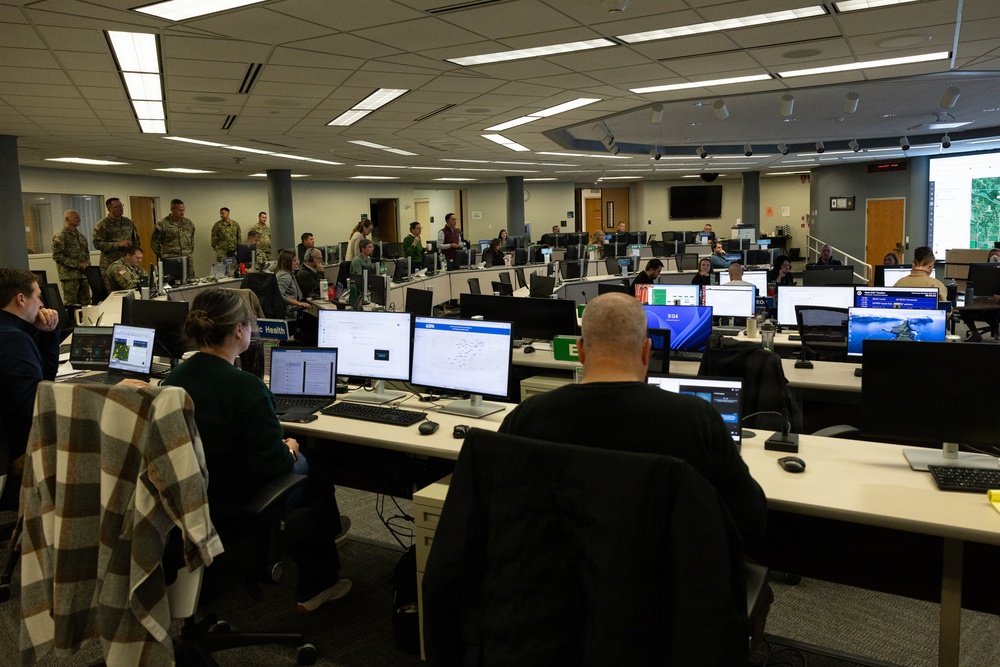
Some western Illinois communities were under a precautionary federal alert when the U.S. Army detonated degraded explosives in Iowa Wednesday morning. The Illinois Department of Public Health said federal models projected any plume would move away from Illinois. FEMA had sent the alert Tuesday to people within 20 miles of the plant. Illinois is keeping its emergency operations center partially activated while it waits for final federal data.
The U.S. Army detonated nearly five tons of degraded lead azide Wednesday morning at its plant in Middletown, Iowa. The Associated Press reported that journalists heard a boom and video showed two white plumes briefly rising over the site. A federal emergency permit had authorized the operation after regulators concluded that disturbing the deteriorating stockpile could cause an accidental explosion.
What the first readings tell residents
The U.S. Environmental Protection Agency said its real-time monitors had detected no airborne lead an hour after the blast and had collected data throughout the event. The Illinois EPA said Wednesday’s weather data pointed to little or no impact in Illinois. The alert’s circular boundary and the modeled path of the plume answered different questions: which communities should be warned as a precaution, and where wind conditions suggested particles could travel.
Authorities lifted the shelter-in-place advisory for affected Iowa communities later Wednesday, the Iowa Capital Dispatch reported. Illinois agencies said they would remain on standby for any unexpected effects across the river.
Air readings are only one part of the federal review. Before the detonation the EPA counted 1,216 samples across air, soil, dust and water, including 650 soil samples. The emergency permit calls for monitoring before, during and after the operation and for cleanup where required. Sampling after the blast can help regulators answer a question that the first air readings leave open: whether lead settled on surfaces or reached water in the areas sampled.
Illinois said its emergency center will continue coordinating county requests and protective measures for schools, health care facilities and other vulnerable populations. Its state update page links to the federal monitoring dashboard and will carry additional federal data as the state receives it.